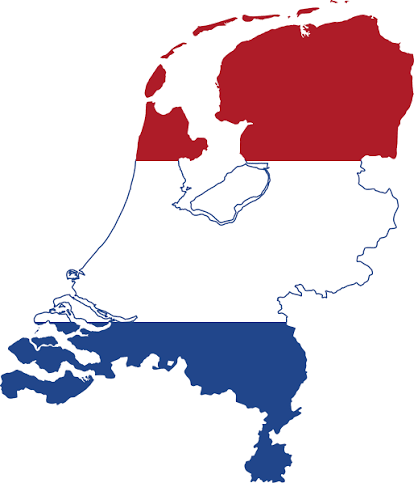
The Netherlands is a popular European study destination known for its practical education system, international outlook, high quality of life, and strong connections with business and innovation. Its capital is Amsterdam, while The Hague is the seat of government. The country’s official languages are Dutch and Frisian, its currency is the euro, and it has no official religion
| Label | Details |
|---|---|
| Full Name | Kingdom of the Netherlands |
| Population | Approximately 18 million |
| Capital | Amsterdam |
| Largest City | Amsterdam |
| Currency | Euro (€ / EUR) |
| Area | Approximately 41,850 SQ KM / 16,158 SQ MI |
| Major Language | Dutch |
| Major Religion | Christianity / Secular |
| Life Style & Culture | Dutch / European / Multicultural |
The Netherlands offers internationally recognised higher education with a strong focus on practical learning, innovation, entrepreneurship, and employability. Its central location makes it convenient for travelling to Belgium, Germany, France, and other European countries.
International students can benefit from:
English-taught programmes, particularly in business, management, technology, engineering, and applied sciences.
A multicultural and internationally oriented learning environment.
Practical teaching connected to industry and employers.
Modern cities, efficient public transport, and excellent cycling infrastructure.
Opportunities to develop international networks and professional experience.
The Netherlands offers a modern, multicultural European lifestyle that combines historic cities, lively urban centres, peaceful towns, and scenic countryside. International students can enjoy cafés, local markets, museums, music festivals, sporting events, art galleries, theatres, historic architecture, canals, and a wide range of cultural activities throughout the year.
Cities such as Amsterdam, Rotterdam, The Hague, Utrecht, Eindhoven, Groningen, and Apeldoorn offer welcoming student communities and strong international connections. Dutch is the main language used in daily life, while English is widely spoken in universities, workplaces, shops, and student environments.
Cycling is an important part of everyday life in the Netherlands, with extensive cycle paths and student-friendly transport options. The country’s central location also makes it easy to travel to nearby European destinations such as Belgium, Germany, France, Luxembourg, and the United Kingdom
International students must first be admitted to an accredited Dutch university or university of applied sciences and follow the required immigration procedure. Non-EU/EEA students generally need an entry visa and student residence permit when their programme lasts longer than 90 days. The institution usually applies for the residence permit on the student’s behalf.
Students must:
Enrol in an accredited, full-time programme at an institution recognised by the Dutch Immigration and Naturalisation Service (IND).
Maintain sufficient academic progress, normally at least 50% of the required credits each academic year. For a 60-credit programme, this usually means earning at least 30 ECTS credits.
Have sufficient funds for tuition and living expenses.
Maintain appropriate health insurance according to their personal situation.
Follow the conditions of their residence permit and remain actively enrolled.
If a student does not make sufficient progress without an accepted reason, the institution may be required to report the situation to the IND, which can affect or lead to withdrawal of the residence permit.
The Netherlands offers internationally recognised higher-education institutions through two main sectors: research universities and universities of applied sciences. Research universities focus on academic study and scientific research, while universities of applied sciences provide practical, career-oriented education.
Students can pursue Bachelor’s, Master’s, and PhD degrees. A research-university Bachelor’s programme usually takes three years and is worth 180 ECTS credits, while a Bachelor’s programme at a university of applied sciences generally takes four years and is worth 240 ECTS credits. Master’s programmes normally take one to two years, and PhD programmes usually involve approximately four years of research
| SL | Name of University / Institution | City / Category |
|---|---|---|
| 001 | Wittenborg University of Applied Sciences | Apeldoorn / Applied Sciences and Business |
No institution found. Please try another search.